

Learning Outcomes
The true value of reading
by Rachel Lulich
If you’ve done formal coursework in recent years, you’ve seen a section for “Learning Outcomes” on the syllabus. This section tells you what you should know or be able to do by the end of the class. Most books that you get at the store or library don’t have a set of learning outcomes included. Some how-to books might, in the introductory sentence, explain what you will get out of the book, but that’s the only place I’ve seen them. And yet, we do learn things when we read. Sometimes it’s the “moral of the story.” Sometimes it’s a knowledge of a subject or historical events. But there’s another type of learning outcome we get when we read books that’s more organic to the text.
When I was in middle school, I picked up my brother’s copy of Robinson Crusoe. I read it in one sitting—I was riveted. I loved it so much that when I finished, I read every single word on the front cover, the copyright page, and the back cover. Among those words were these: “Edited and Abridged.” I had no idea what that meant, so I asked my brother. He explained that when a classic was “edited,” some aspects of the language and grammar have been updated, and when it’s “abridged,” the story has been shortened.
I. Was. Appalled.
I felt like I had been lied to and cheated out of the real story I thought I had read and loved so much. I immediately added the complete, unedited, and unabridged version of Robinson Crusoe to my Christmas list, and quite fittingly, my brother is the one who gave it to me.
If you’ve read Robinson Crusoe in its unedited, unabridged form, you know it’s quite a tall order for a middle schooler. I was already a strong reader, but I was no match for this novel. There’s a reason they make edited, abridged versions of it. From the very first page, I encountered whole paragraphs made up of only one complicated sentence, and up to a page and a half consisting of just one paragraph. In author Daniel Defoe’s time, they didn’t create new paragraphs for dialogue, nor did they use quotation marks—so not just reported speech but actual speech was simply integrated into the paragraph in the same formatting as the narration. And the story! Crusoe’s time on the island is only about half the book! He lives a whole lot of life both before and after.
It took me a while to get used to the prose, and to decode the punctuation and lack thereof, but I did get used to it. I read the whole book, and remains to this day one of the most impactful things I’ve ever read. Finishing it gave me a tremendous sense of accomplishment, and nothing I read afterward ever seemed that difficult. And I learned so much.
Most of us, particularly when we’re children, don’t pick up a book with the goal of acquiring new vocabulary or familiarizing ourselves with sentence structures, but we do learn these things naturally when we read. That is exactly what happened when I read the unaltered Robinson Crusoe. I learned to how identify and use context, specifically to figure out whether I was reading narration or speech, and who was speaking (no dialogue tags, either, in that day and age). And I learned the difference between colons, semicolons, commas, and periods, and how to use them in conjunction with one another to guide the reader through complex sentences.
I don’t write like Daniel Defoe did. But deciphering his writing affected the way I wrote. It gave me an instinctive understanding of punctuation and sentence structure I didn’t have before, and may never have learned so well in the classroom. And I’m pretty sure Defoe is the reason I don’t have difficulty following Paul’s sometimes complex sentences in his epistles.
Reading teaches us how to read, and how to write. It does so organically, with compounding results. We may not often choose books based on what they might teach us about grammar or character arcs, or how it might help us improve our reading or writing skills, but we certainly could. There’s nothing wrong with a challenging read now and then, and if it’s a good story well told, we won’t even realize we’re learning.

December 18–24, 2025 - Holiday Bundles sale extended! Bundles are 20% off on our website! (though they may not arrive before Christmas)
December 24–January 2 - Delayed order fulfillment (we’ll be celebrating with our families)
January 6, 2026 - Release of I’ve Got a Bad Case of Poetry! Preorder now

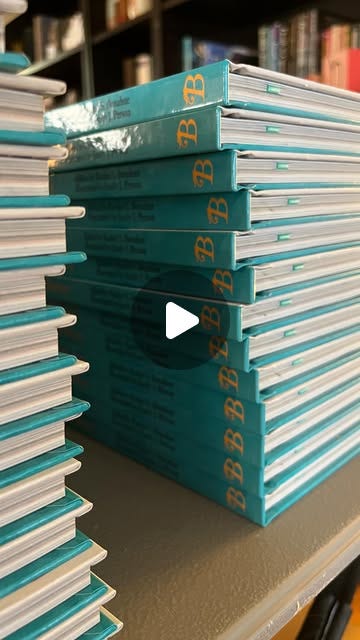
We got our Kickstarter backers’ rewards out the door early this week, and they are winging their way through the postal services to your doors. THANK YOU to all of our backers for your support and help in bringing I’ve Got a Bad Case of Poetry to life.
If you missed out on the Kickstarter, you can preorder the anthology on our website and it will ship out the first week of January!
Also please follow Bandersnatch Books on Instagram or Facebook!

“What we become depends on what we read after all of the professors have finished with us. The greatest university of all is a collection of books.”
Thomas Carlyle

Lol I was literally thinking Defoe sounded a bit like the apostle Paul! 😂😂
I love this! I had a similar experience with Treasure Island as a kid. Picked up my mom's copy that she won as a prize in school and was entirely lost for the first few chapters. But I ploughed on and ended up loving the story. I still treasure that copy.